
The project
An integrated energy centre on an existing 500 kV corridor in Huron County: storage, firm generation and a connected data campus.

Bedrock Energy Corp.
Bedrock is an EnergyTech startup focused on the clean energy transition and AI data sovereignty for Canada.

Storage · Firm generation · Grid connection
Demand is returning faster than firm supply, and the fastest-growing part of it runs every hour of the year. Bedrock develops the sites that can serve it, and sell the surplus back to the grid.
See the projectWhere to start
An integrated energy centre on an existing 500 kV corridor in Huron County: storage, firm generation and a connected data campus.

Why Canada’s next decade of computing needs firm power under Canadian control, and what that asks of Ontario.

Bluewater, the August 2026 vote, and what is different about the project that comes back.
Our approach
Decarbonising a grid was never one technology replacing another. It is a question of what gets built, where it sits, and what covers the hours the weather does not. The computing infrastructure going up alongside it asks the same question, in a hurry. Both need the same three answers at once: consistency, so the power is there in every hour of the year; diversity, so no single resource has to carry the load alone; and cost that falls rather than rises as the system gets cleaner.
No one technology delivers all three. A combination can: four assets on one connection, sized so a continuous load can be served around the clock and the surplus sold to the grid. Each covers a weakness in the others, which is what turns intermittent generation into power somebody can sign a contract for.
It is also where the cost case comes from. Wind and solar charge the storage instead of being curtailed, so energy already paid for is sold rather than spilled. The reservoirs are already underground and the transmission already crosses the site, so two of the largest costs in a project of this kind are never incurred at all.
Bedrock Energy Campus
Generating and storage capacity on the site
Capacity by asset
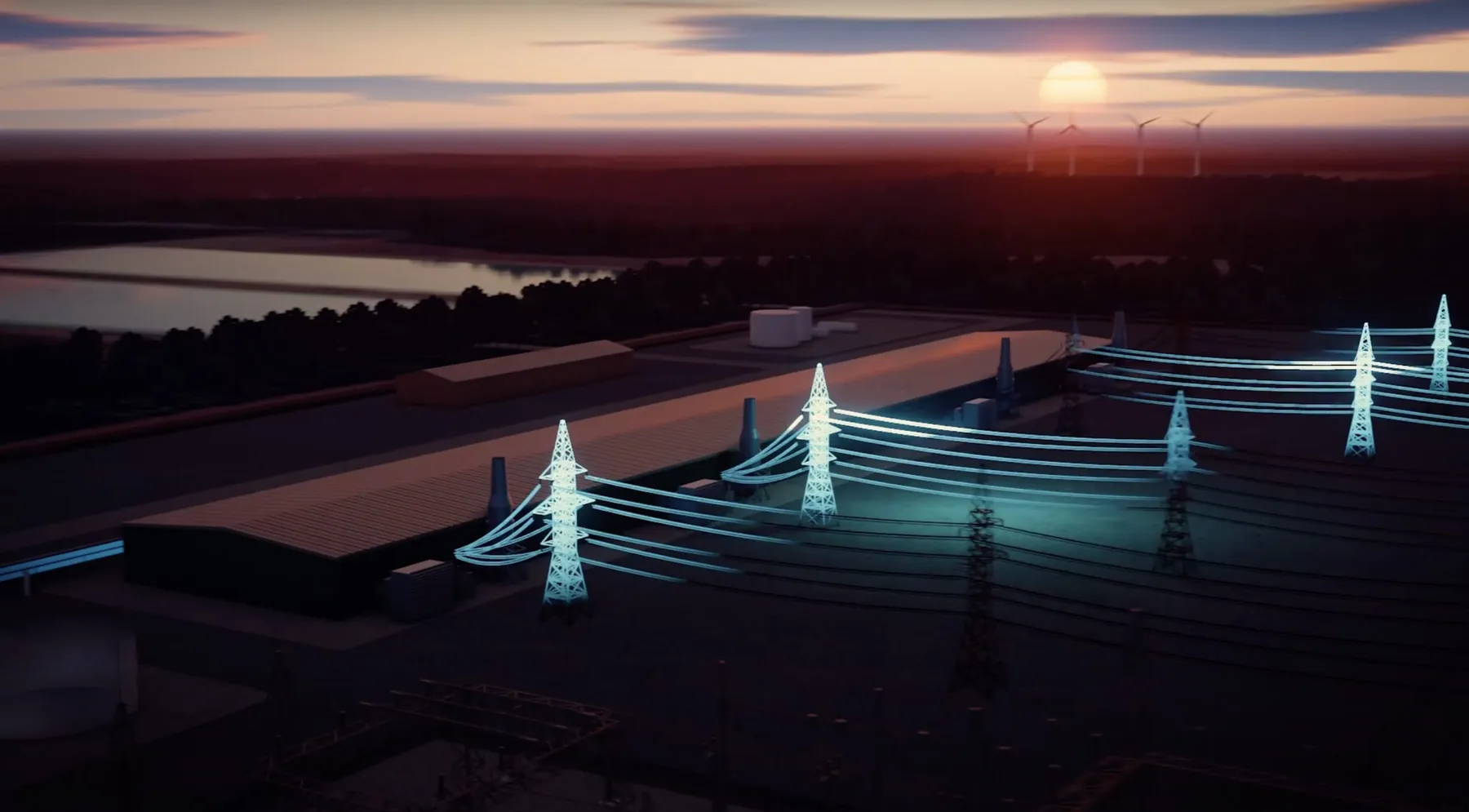
The wind is blowing and the province does not need the power. Surplus goes underground as compressed air and into the batteries instead of being curtailed, and the campus runs on what was stored earlier. The turbines stand down.
Demand across Ontario is at its highest. The turbines hold the campus steady behind the meter while stored air and the batteries sell into the peak, the hour the grid is short and the power is worth most. Whatever wind and solar are producing still trickles into the batteries behind it.
Days of cold, still weather with little wind or sun. Storage alone cannot carry a week, so the turbines carry the campus and the batteries absorb the swings. What renewable output there is still goes to the batteries, and off-peak power refills the reservoir for the next peak.
Solar is at full output. The batteries take the sharp edges off it, air is compressed with what is left over, and the campus runs on renewable power as it arrives. Nothing is burned.
Watch the explainer
The full cycle: surplus, compression, storage in porous rock, and generation back to the grid, with about 66% of the energy returned. See the figure and its source.
The storage asset
Compressed air storage is one of four assets on the site, and the one nobody else can replicate quickly. It charges on surplus electricity, burns nothing, and holds eight hours of supply underground.




01 · Surplus
Ontario generates more electricity than it needs in periods of low demand. Without somewhere to put it, that surplus is curtailed.
02 · Compress
That electricity drives compressors instead of being thrown away. The equipment is proven and already in industrial service.
03 · Store
The air is stored in porous geological formations already present underground: existing environmental features, put to use rather than replaced.
04 · Generate
The air is reheated with the heat captured on the way in and expanded through generating trains. Nothing is burned, and the site can hold 75 MW for three days if the system needs it.

The first project
Bedrock Energy Campus, Bayfield. Filed with the IESO in October 2026.
On site
1,300
Megawatts of generation and storage
To the grid
1,000
Megawatts of export capacity
In total
Where Bedrock works
Bayfield is the first project and the most advanced. Stanley is held and not yet developed. Both use geological features that already exist, in communities Bedrock has been meeting with since 2023.
Bedrock site Demand centre
Choose a place to trace its connections. Drag to pan, or use the zoom controls.
8 hDaily discharge at full rating
75 MWHeld for three days in an emergency
10 minStanding start to full load
Storage figures for the Bayfield project as filed with the IESO in October 2026. The three-day reserve is an emergency mode, not a daily one.
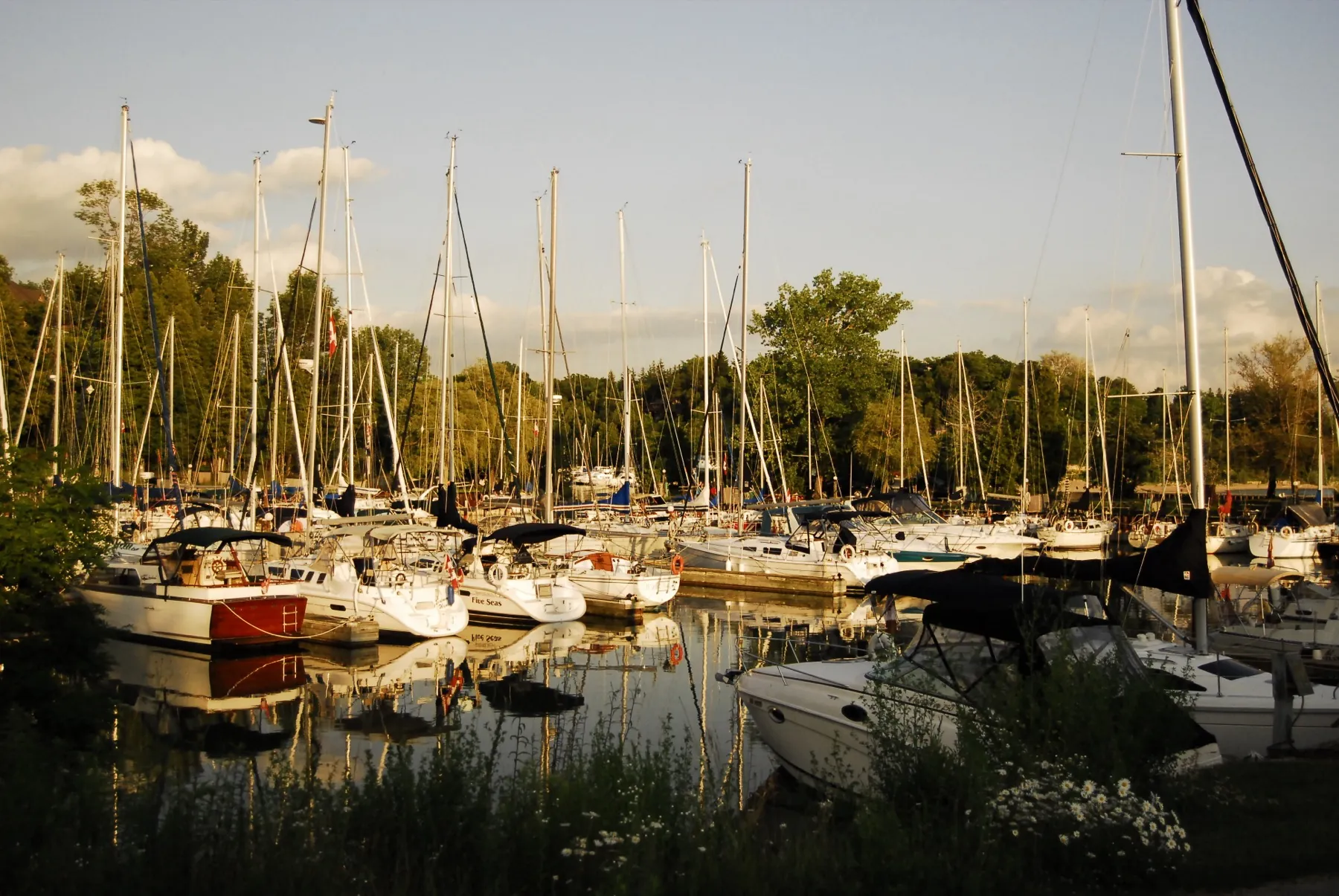
Site 01
Municipality of Bluewater, Huron County. A 198-acre plant site on an existing 500 kV corridor, filed with the IESO in October 2026. The project
Photo: cate cuerden, CC BY 2.0
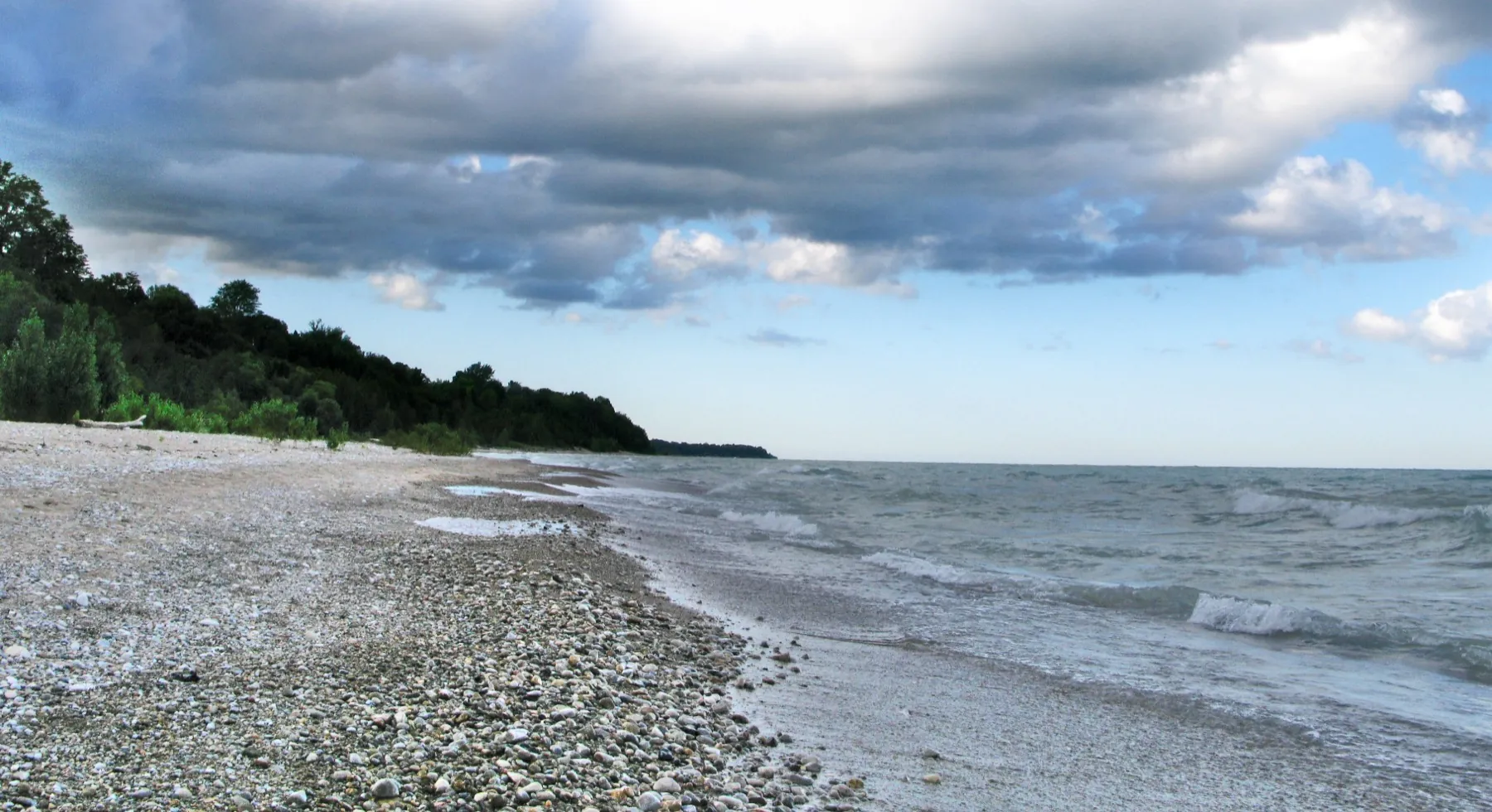
Site 02
Municipality of Bluewater, Huron County. The second reservoir position, held since 2017 and not yet developed.
Photo: Magnolia677, CC BY 4.0 (Lake Huron at Bayfield)
Bedrock is returning to Bluewater council with the integrated project.
Show your supportThe geology
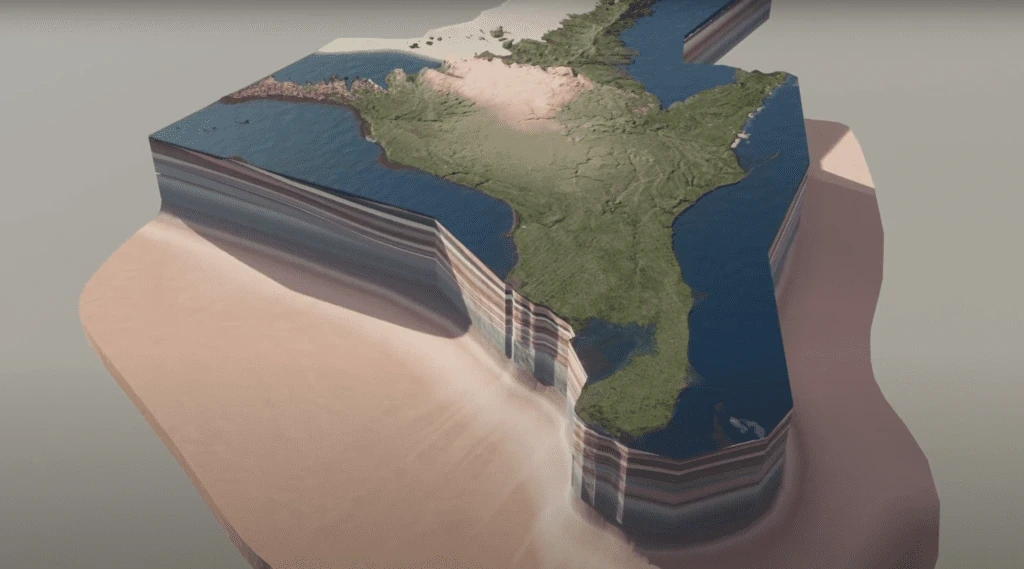
The reef formations under Huron County, why they held gas for 450 million years, and what that means for storing air in them.

Latest from Bedrock
Impact · 27 April 2026
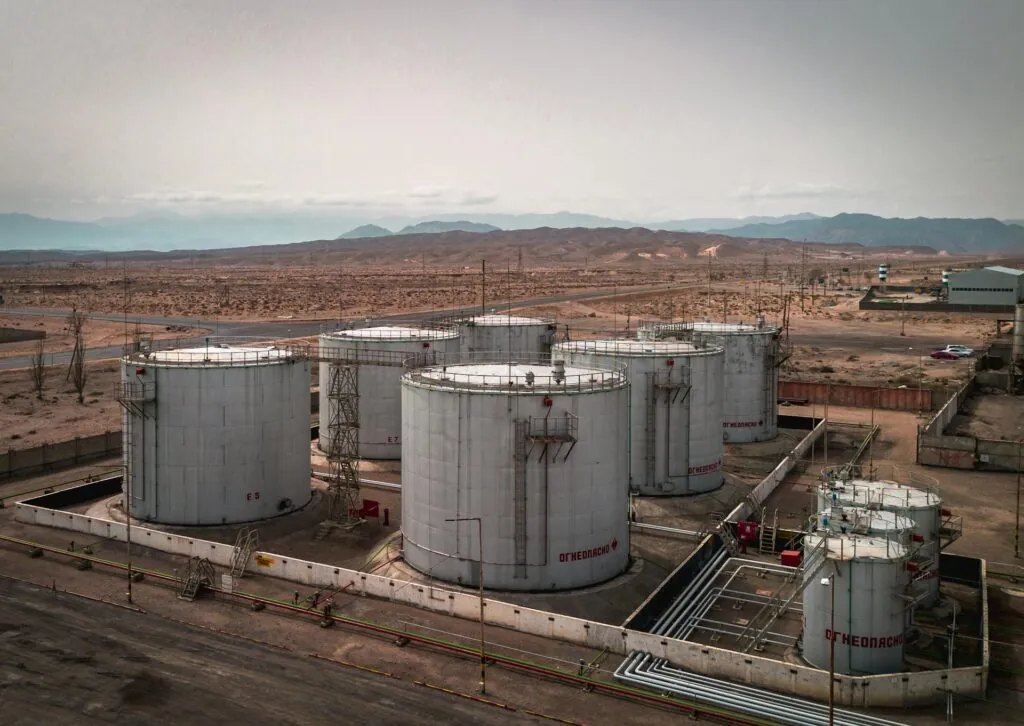
Southwestern Ontario’s long history of oil and gas development left behind a hidden environmental legacy: thousands of old, orphaned, or poorly documented wells, many of …
Impact · 06 March 2023
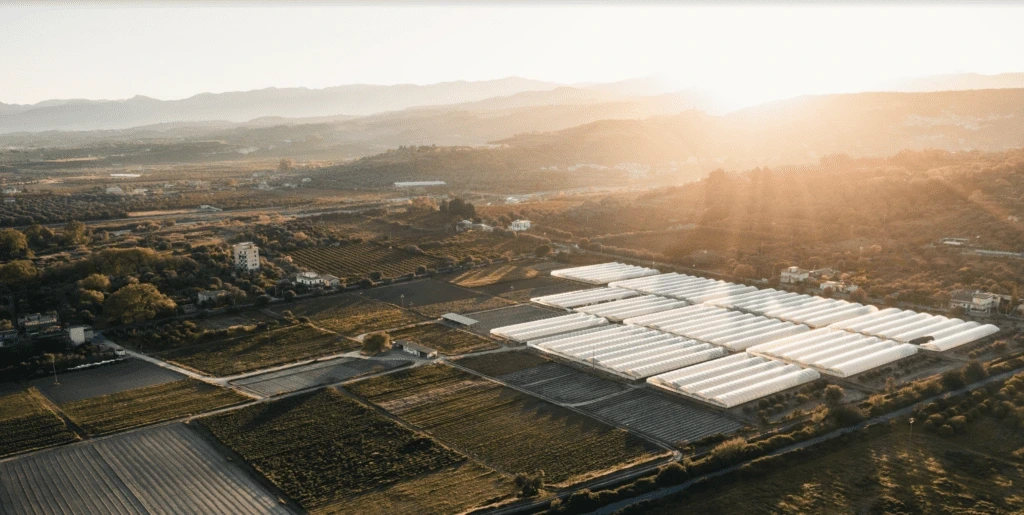
Barring a technological miracle, Ontario’s $400 billion plan to “decarbonize” its electrical grid will lean heavily on energy storage.…
Technology · 28 February 2023
(Video & Transcript)…
Learn more about CAES
Get in touch
Landowner, municipality, supplier or press: tell us who you are and we'll route you to the right person.