
Bedrock Energy Corp.
Impact
What a project of this size is actually worth depends on who is asking. The grid, the province, the county and the people living next to it each get something different out of it, and each deserves a straight answer.

For the grid
Ontario needs capacity it can call on. The IESO forecasts a system need emerging in 2032 and capacity requirements rising to roughly 2,500 megawatts a year from 2036. Long-duration storage is scarce, and the procurement that targets it treats compressed air as one of only two eligible technologies.
The centre offers dispatchable capacity, eight to ten hours of storage, black start and ancillary services at a single point of connection, on a corridor that already exists, without a new transmission line.
For Ontario
Large loads are arriving faster than firm supply, and the province has said it will look more favourably on projects that bring their own power than on those that draw from the grid. A site that generates more than it consumes is the difference between a new load being a problem for the system and being an asset to it.
For Huron County and Bluewater
What the project returns to the county is being planned in step with the community, not announced to it. Bedrock is working towards a Community Benefits Agreement, a Road Users Agreement covering the roads the build will actually use, and an assessment base at the industrial rate. What each is worth, and who governs it, belongs in the conversation with the municipality and with neighbours rather than in a figure published before anyone has agreed to one.
The same applies to employment. There will be several years of construction work and permanent operating roles once the site is running, and Bedrock is not putting a number on either until the phasing is fixed. This project has already been criticised, fairly, for figures that moved. We would rather publish late than publish wrong.
For the land
The plant site is 198 acres. Land not built on stays farmed. Land taken out of production is returned to agriculture at decommissioning, and Bedrock is willing to see that obligation written into a municipal agreement and bonded rather than promised.
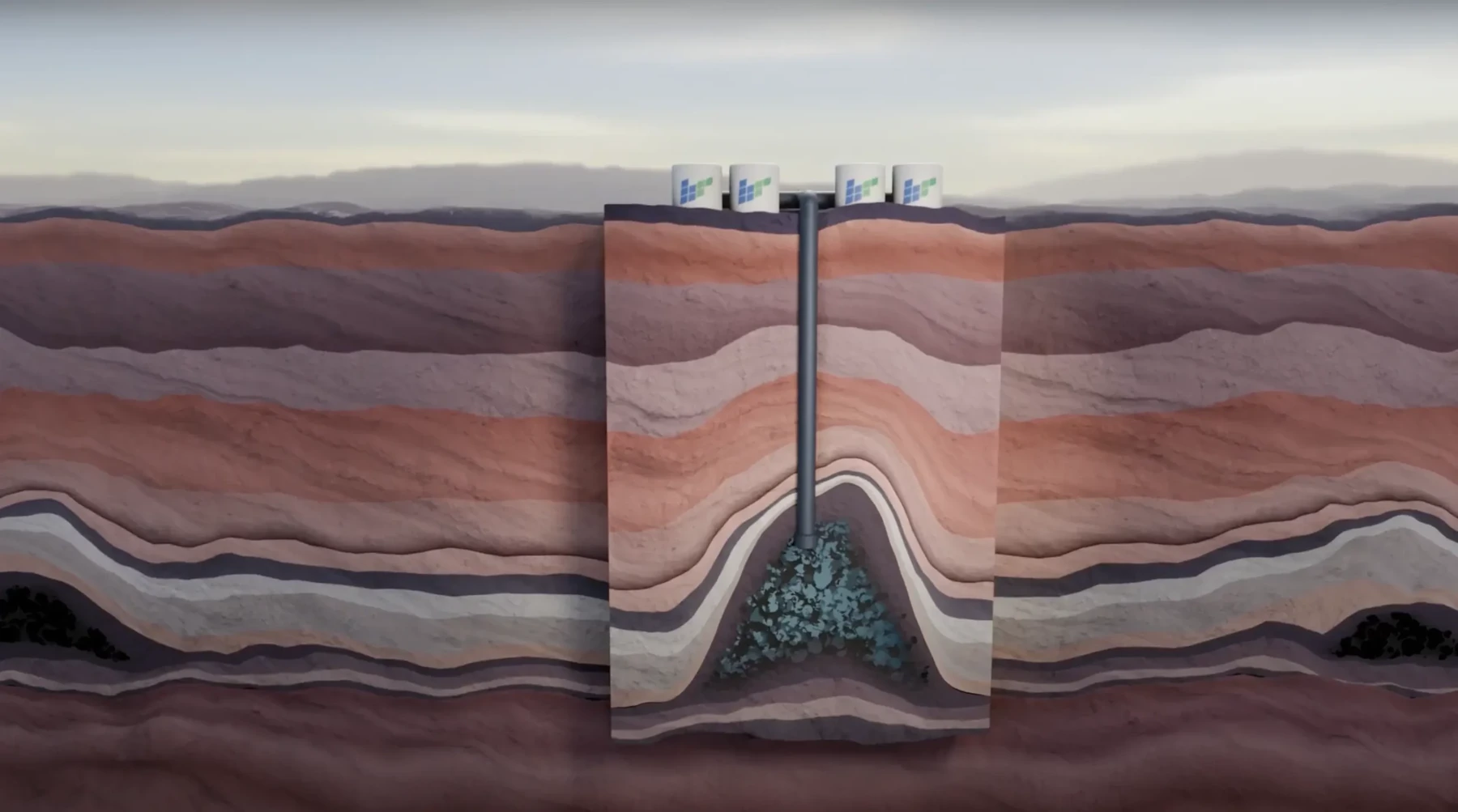
The reservoirs themselves are more than 500 metres down, below the aquifers. Reusing them means the wells that reach them are properly characterised and maintained for decades. In a part of Ontario carrying a long legacy of abandoned oil and gas wells, that is worth something on its own.
On emissions
The compressed air plant burns nothing: it is charged with electricity and discharged with stored heat. The gas turbines on site do burn fuel, and saying otherwise would be dishonest. They are designed for hydrogen blending and for carbon capture, they run when the system needs them rather than continuously, and they are what allows a round-the-clock supply commitment to be made at all.

Get in touch
Talk to Bedrock
Landowner, municipality, supplier or press: tell us who you are and we'll route you to the right person.
Contact us