
Intelligent analytics
Energy Analytics
An AI campus is only as scalable as the power behind it, and power is not an annual average. A campus is designed, financed and contracted on its worst hour. Bedrock built a platform to find that hour before anything is poured.

ETNX: every hour, modelled before it is built
There are 8,760 hours in a year. Most load forecasting collapses them into a single number – a megawatt figure, a capacity factor, an annual consumption estimate – and that number is useless for the decision that actually matters, which is whether this site can carry this load in the hours when the system is tightest.
The ETNX Platform – Energy Transition Nexus – is Bedrock’s power systems analytics platform. It models energy consumption for scalable, modular AI data centres hour by hour, against what a site’s generation, storage and connection can deliver in those same hours, across every phase of a build-out. It was written by people who develop energy assets for a living rather than by people modelling them from the outside.
A demand model, not a demand estimate
AI load does not behave like industrial load. Training runs draw hard and steadily for weeks; inference follows the working day of whatever continent it serves; cooling tracks the weather outside the hall; and a hall that is being commissioned behaves nothing like a hall that is full. Averaging those together produces a number no engineer should be asked to design to.
ETNX models them separately and adds them up properly. Rack and hall consumption profiles, duty cycles by workload type, cooling demand against ambient temperature, ramp behaviour during commissioning, and the step changes as each module comes online. The output is an hourly demand curve for a campus that does not exist yet, phase by phase, with the uncertainty around it stated rather than buried.
A campus that gets built in modules has to be powered in modules. The build schedule is something the model produces, not something it is handed.
Matched against what the site can actually deliver
The same model runs the other side of the meter. Reservoir state of charge through a charge and discharge cycle. How many hours of storage remain after a long calm. Firm generation availability. Battery response. The limit at the connection. Market and dispatch conditions on the Ontario system, including the hours when the grid has surplus it cannot place and the hours when it has none to spare.
Put the two sides together and the question stops being rhetorical. How many megawatts of modular compute can this site serve firm, in every hour, at each phase of construction? What does the grid see while that happens – relief or burden? Where does the first hour of failure appear, and what is the cheapest thing that removes it: another battery block, another hour of storage, or a different phasing order?
Where the AI does the work
Three places, and it is worth being specific rather than decorative about it.
Learning the load. Consumption traces from comparable facilities, weather records and workload patterns are used to train forecasts of what a campus will actually draw, rather than what a specification sheet says it might.
Finding the constraint hours. Across decades of system data, the platform identifies the hours when supply and demand come closest together – the handful that set the whole design – instead of sampling a typical week and hoping.
Scheduling the assets. When to charge, when to hold, when to run the turbines, when to sell into the market instead of storing. A fleet of four assets has more operating states than a person can usefully reason about, and the value of the site is decided in that scheduling.
There is a symmetry here that Bedrock finds useful. The analysis that sizes the power is the same class of computation the power is being built to serve.
Built for one site, written for any
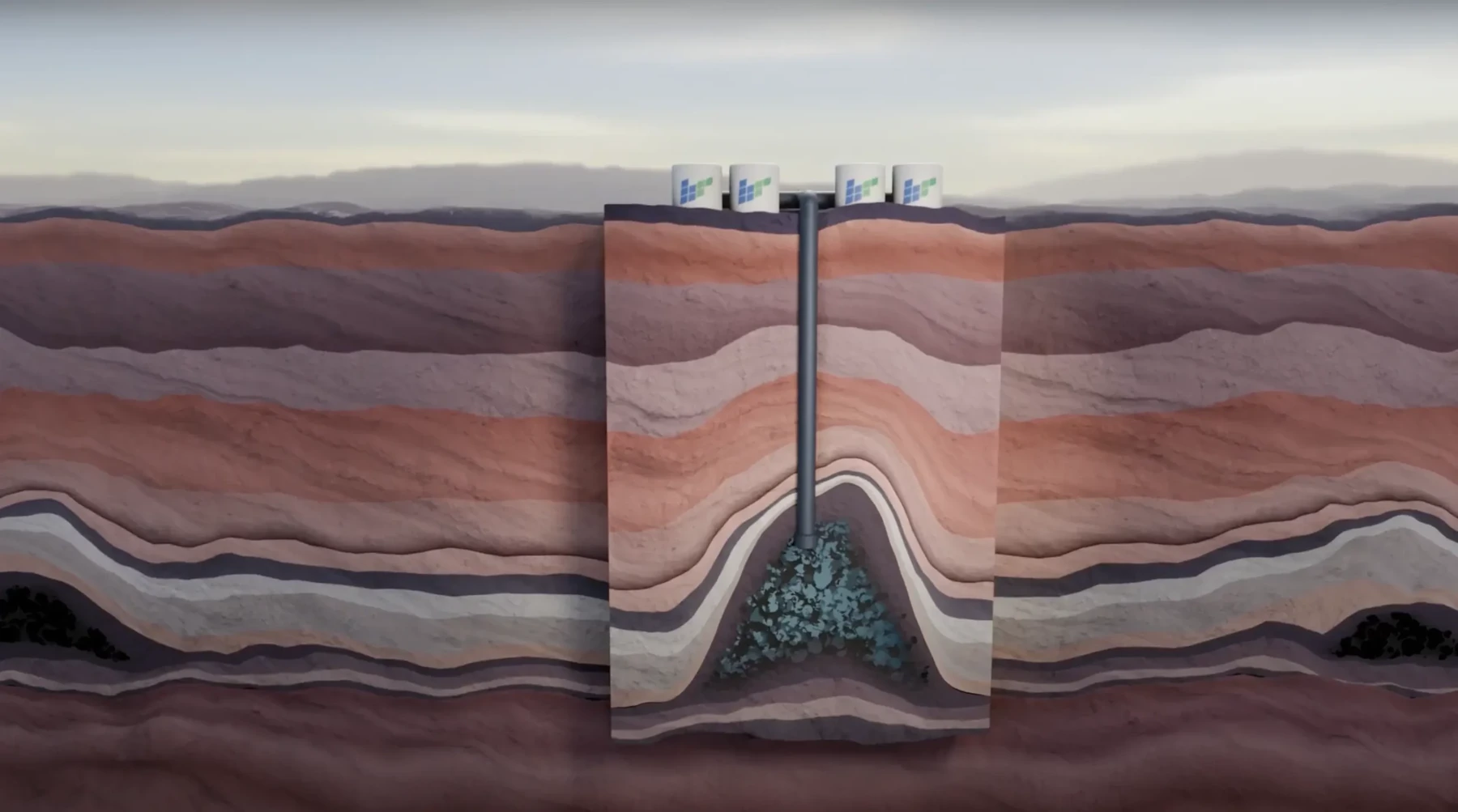
ETNX was built around the Bedrock Energy Campus – four assets, two reservoirs, one 500 kV connection, a phased modular load – because that is the hardest version of the problem and the one Bedrock had to solve first. The filing that went to the Independent Electricity System Operator in October 2026 is modelled in it.
Nothing in the method is specific to Bayfield. Any site where generation, storage and a large continuous load share a connection asks the same questions, and Bedrock expects to answer them for more than one site.
Read more about our approach
The assets the model is pointed at: Infrastructure & Technology. How the capital is staged against the phases: Strategic Investment.

Get in touch
Talk to Bedrock
Landowner, municipality, supplier or press: tell us who you are and we'll route you to the right person.
Contact us