Bedrock Energy Corp.
About Us
Bedrock Energy Corp. develops powered land in Ontario: sites that already hold the geology and the high-voltage transmission needed to supply firm, round-the-clock electricity, and the storage to make renewable generation dispatchable.

Nine years of groundwork
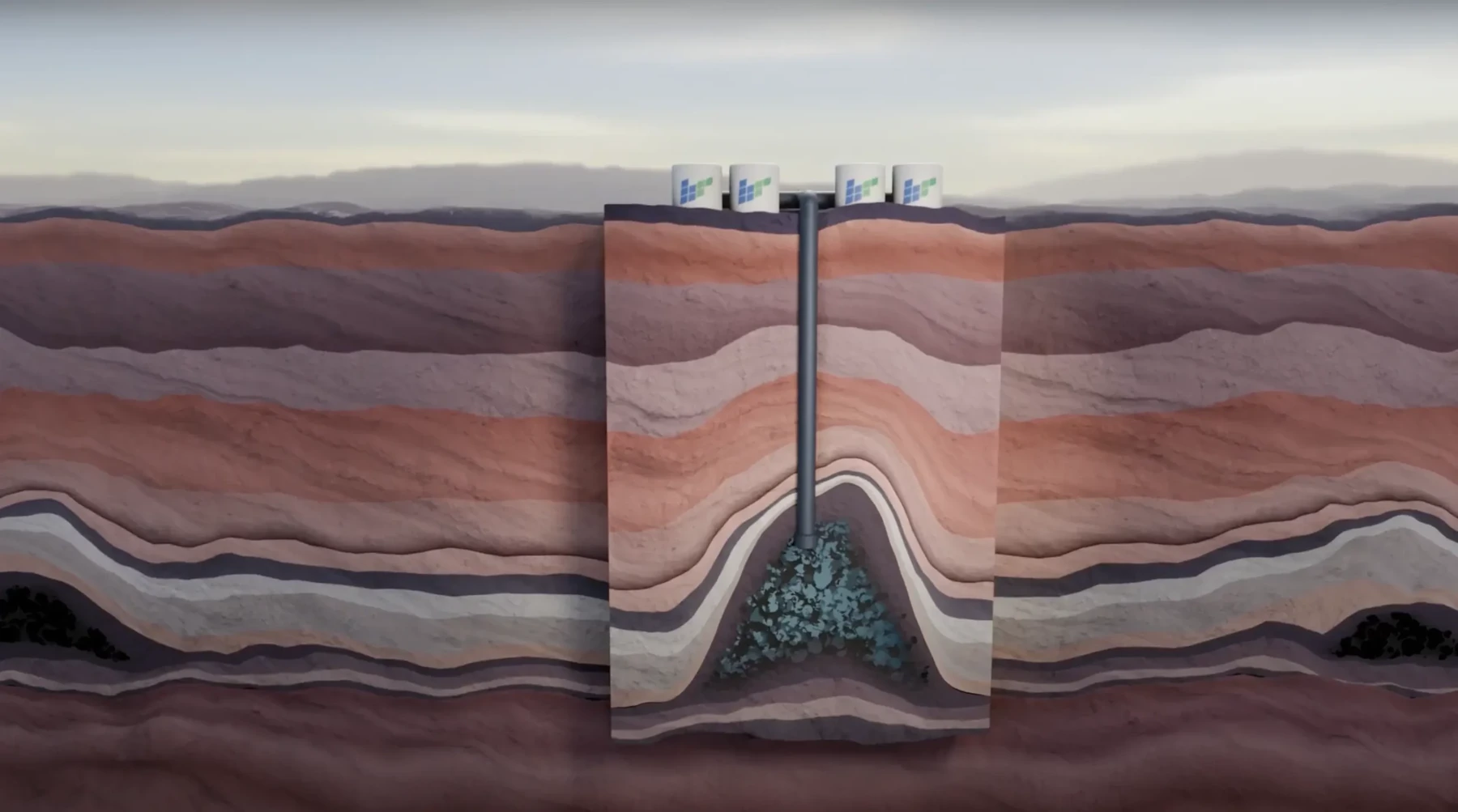
Bedrock was incorporated in 2017 to do something that had not been done in Canada, storing energy as compressed air in depleted natural gas reservoirs rather than in a cavern that has to be excavated first. Securing the reservoir rights, proving the formations would hold air, de-designating them from gas storage and getting a transmission connection assessed took the better part of a decade.
That work is still the foundation. What has changed is what sits on top of it.
The reason is that the market moved. A clean grid needs power that is there in every hour, drawn from enough different sources that no one of them has to carry the load alone, at a cost that falls as the system gets cleaner. The computing infrastructure now being built needs exactly the same thing, sooner. Storage alone does not deliver it. A site with the geology, the transmission and the right mix of assets does.
From one technology to a platform
A reservoir that can store energy is valuable. A site that holds the reservoir and sits under a 500 kV corridor is worth considerably more, because it can carry generation, storage and a large continuous load at the same connection point.
Bedrock now develops that whole arrangement: long-duration storage, firm generation, batteries and a connected campus, phased so each piece earns before the next is committed. The reservoirs remain the asset nobody else can replicate quickly. They are no longer the whole business.
The record so far
- 2017: Incorporated. Reservoir rights secured at Bayfield and Stanley; landowner agreements begin.
- 2018–19: Preliminary engineering. The Ontario Energy Board de-designates the reservoirs from gas storage.
- 2019–21: Independent reservoir modelling; first equipment selection.
- 2022: Front-end engineering and electrical design.
- 2023–25: Environmental assessment begins; consultation with five First Nations; transmission feasibility completed with Hydro One.
- 2026: Technical Feasibility Study filed with the IESO on 22 October for the integrated project.
How Bedrock is built
Privately held and funded by its own shareholders since 2017. A small operating team, a board that has run utilities, pipelines and power companies, and specialist firms retained for the work that needs them, from owner’s engineering and environmental assessment through to reservoir modelling and government relations.
It is a development company and says so plainly. The value Bedrock creates is in taking a site from geology to a connection agreement. Who ultimately builds and operates is a commercial question, and an open one.

Get in touch
Talk to Bedrock
Landowner, municipality, supplier or press: tell us who you are and we'll route you to the right person.
Contact us